

Perfect Asphalt Subfloor Preparation for Synthetic Sports Courts: A Technical Guide
Installing a synthetic sports court (basketball, tennis, or multi-purpose) is only as good as its foundation. Unlike standard asphalt roads, sports courts demand precision engineering, strict tolerances, and specialized layering to ensure player safety, surface longevity, and optimal ball performance.
This guide details the complete technical specification and procedure for preparing asphalt subfloors that deliver flawless synthetic court installations.
Why Asphalt Subfloor Preparation Matters
A properly constructed asphalt base:
-
Provides uniform shock absorption and ball bounce
-
Prevents cracking and uneven settlement
-
Ensures proper water drainage (critical for outdoor courts)
-
Extends synthetic surface life by 5-10 years
-
Meets international sports standards (FIBA, ITF, etc.)
Step-by-Step Technical Procedure
Step 1: Sub-Base Excavation and Preparation
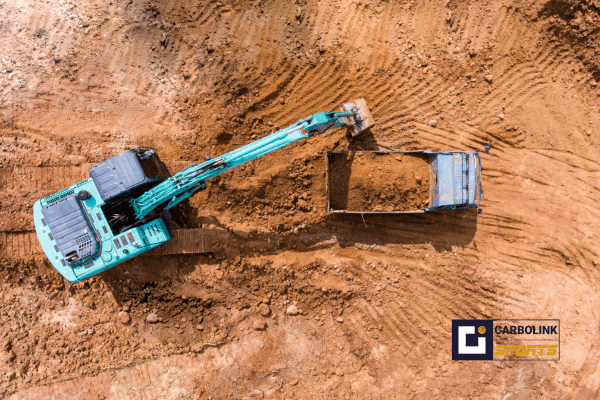
a) Soil Excavation
- Excavate black cotton soil up to 12 inches (300mm) depth
- Remove all organic material, debris, and loose soil
- Ensure formation level is 4-6 inches above surrounding ground for drainage
b) Aggregate Base Layer
- Use 63mm crushed stone aggregate (stone metal)
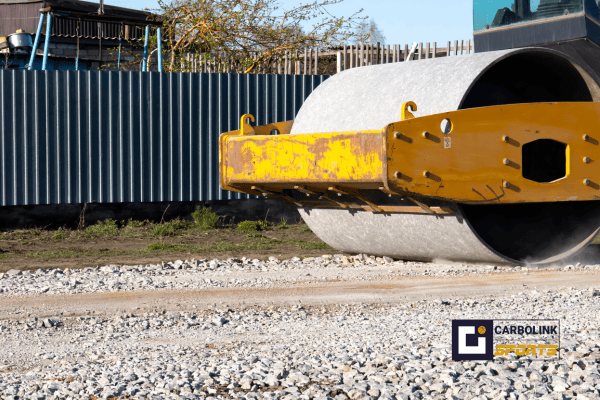
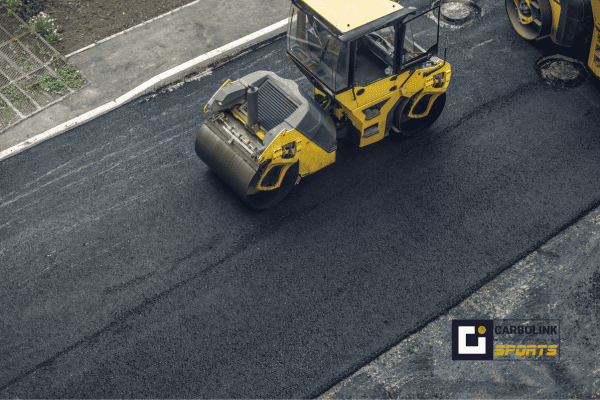
- Compact in layers using heavy road roller (minimum 8-10 ton)
- Achieve 95% minimum Proctor density
- Final surface should not vary more than ½ inch from true plane
Step 2: Water Bound Macadam (WBM) Layer
a) Material Specifications
- Use 40mm crushed aggregate
- Bind with soft murrum/stone dust
- Compact thoroughly with vibratory roller
b) Water Leveling and Slope
- Create 1 inch fall every 12 feet (0.83% minimum slope)
- Ensures proper water exit and prevents ponding
- Slope should run side-to-side (never from baseline to net)
Step 3: Termite and Weedicide Treatment
Application:
- Spray approved termite treatment chemical across entire area
- Apply weedicide to prevent vegetation growth
- Critical for long-term stability and preventing root damage
Step 4: Bitumen Emulsion Application
Procedure:
- Spray bitumen emulsion evenly across prepared WBM surface
- Acts as tack coat for superior asphalt adhesion
- Allow to cure for 2-4 hours before next layer
Step 5: First Asphalt Layer (Binder Course)
Specifications:
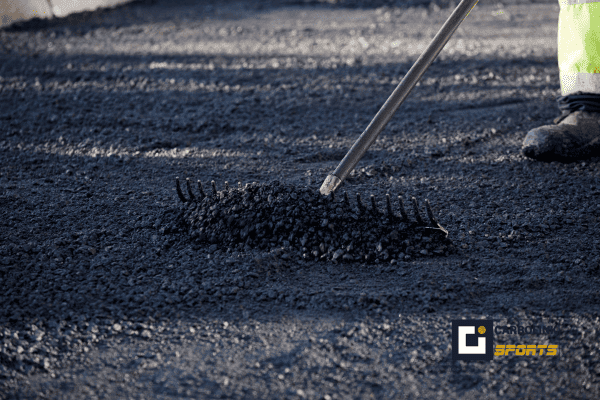
- Thickness: 20mm compacted
- Aggregate: 12mm crushed stone
- Bitumen: 80/100 grade (minimum 5.5% by weight)
- Application: Hot mix plant, spread by paver
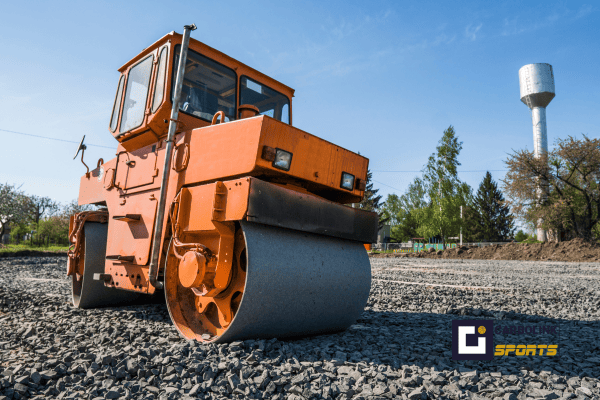
- Compaction: Heavy roller, 95% density
Surface Tolerance: ±¼ inch in 10 feet
Step 6: Sand Silt Coat (Surface Leveling Layer)
Special Mix:
- 10mm thick sand silt coat
- Extra bitumen: 4kg per square meter (ensures smooth, impermeable finish)
- Provides neat, smooth surface for synthetic coating adhesion
Key Difference from Roads: This extra bitumen layer is unique to sports courts—roads don’t require this smoothness.
Step 7: Perimeter TOE Wall and Drainage
TOE Wall Specifications:
- Length: 340 running feet (for 110′ × 60′ court)
- Height: 18 inches
- Thickness: 8 inches
- Include plaster finish for clean edges
Drainage Line:
- Length: 120 running feet
- Pipe thickness: 4 inches
- Slope: 1 inch per 12 feet for water exit
Step 8: Curing and Surface Verification
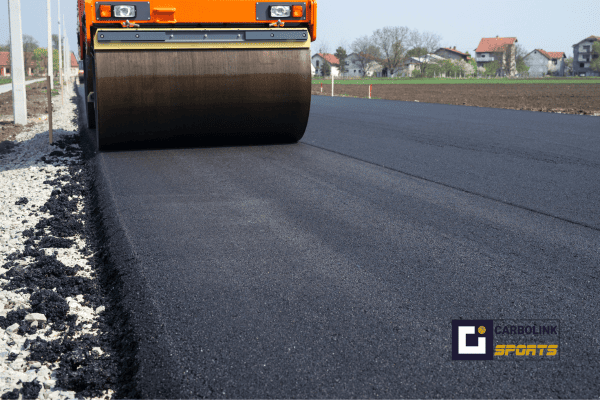
Curing Time: Minimum 14 days before synthetic surface application
Quality Checks:
- Surface tolerance: ±1/8 inch in 10 feet (stricter than roads)
- Void content: Maximum 7%
- No cracks, depressions, or irregularities
- Water infiltration test: Must pass
Advantages of Proper Asphalt Subfloor
✅ Player Safety: Consistent shock absorption reduces injury risk
✅ Ball Performance: Predictable bounce and ball response
✅ Longevity: Synthetic surface lasts 8-12 years vs 3-5 on poor base
✅ Weather Resistance: Proper drainage prevents water damage
✅ International Compliance: Meets FIBA, ITF, and BWF standards
✅ Cost Efficiency: Prevents costly repairs and resurfacing
Precautions and Quality Control
⚠️ DO NOT:
- Use regular road-grade asphalt specifications
- Skip the sand silt coat (critical for smoothness)
- Rush curing period (premature coating causes delamination)
- Allow traffic on base before full curing
- Ignore slope requirements (water pooling ruins courts)
✅ DO:
- Test aggregate gradation before each layer
- Use specialized sports court contractors
- Conduct core density tests after compaction
- Verify drainage flow with water test
- Document each layer with photos for client records
Applications: Where This Matters
This asphalt preparation methodology is essential for:
- Basketball Courts (indoor & outdoor)
- Tennis Courts (acrylic & synthetic turf)
- Multi-Purpose Courts (badminton, volleyball)
- Running Tracks (polyurethane surfaces)
- Pickleball Courts
- Cricket Pitches (synthetic turf base)
Why Choose Carbolink for Your Sports Court Project
Carbolink Group brings 15+ years of expertise in sports flooring infrastructure, delivering:
- 10,000+ successful projects across Asia
- Trusted by Indian Army, Microsoft, Maldives Government and top sports facilities
- End-to-end solutions: from asphalt base to synthetic surface installation
- Technical support: on-site guidance and quality assurance
Ready to Build Your Champion Court?
Contact Carbolink Sports today for:
- Free site inspection and base design consultation
- Competitive pricing on asphalt and synthetic materials
- Professional installation teams
- 5-year warranty on sports flooring systems
📞 Call: 8885099551 / 9030432769
🌐 Visit: carbolinkindia.com