Deep Underground Basements & Moving Expansion Joints
High-rise underground basements house essential building services, electrical mainframes, and car parks. Because these immense footprints experience significant seismic and thermal shifts, expansion joints are necessary. While poor seals fail under water pressure, Carbolink’s high-movement polyurethane sealants and hydro-active injection resins block deep water ingress to keep your critical assets completely dry.
The Problem
Commercial basements are situated deep below the surface and face ongoing underground water tracking. To handle building settlement and thermal movement, concrete structures require designated expansion joints. However, if these movement joints are filled with low-grade or brittle materials, the natural shifting of the high-rise tears the seal apart. This creates direct entry channels for underground groundwater to flood storage zones and damage expensive building infrastructure.
What is "Hydrostatic Infiltration Failure"?
Hydrostatic infiltration failure occurs when water gathering in the surrounding soil builds massive upward water pressure against the outer walls and floor of a deep concrete basement. Water continuously searches for lines of least resistance, finding its way to the construction joints and movement cracks. If the joint seal lacks elasticity, this pressure pushes water straight up through the floor joints, turning deep basements into humid, flooded spaces that can weaken the building’s concrete base over time.
— Carbolink Solution
High-Movement Polyurethane Joint Sealing & Injection System
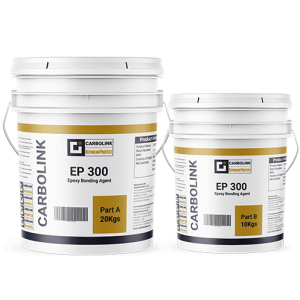
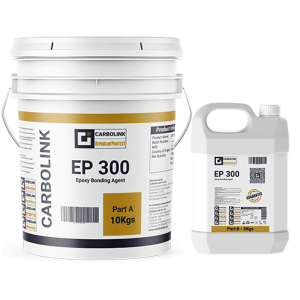
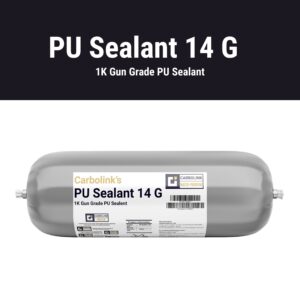
PU Sealant 14 G paired with EP 300 injection systems—a combined chemical process engineered to seal high-movement expansion gaps and block high-pressure water leaks.
Using structural saws to clean, rout, and widen the expansion joints, thoroughly extracting all degraded fillers, dust, and debris to prepare clean side-walls.
Inserting a non-absorbent, closed-cell polyethylene backer rod into the routed gap to set the correct sealant depth and prevent three-sided joint adhesion.
Injecting our high-viscosity elastomeric sealant (PU Sealant 14 G) deep into the joint, leveling it flush to establish a durable, watertight rubber barrier.
Flexes, compresses, and expands up to 25% of the joint’s original width, keeping a tight seal during severe seasonal thermal expansions and building shifting.
Total Hydrostatic Immunity
Resists high continuous groundwater pressure from high water tables, keeping underground vaults, server rooms, and basements dry.
High Subsurface Adhesion
Forms a permanent chemical bond to internal concrete side-walls, ensuring the elastic joint does not tear away or lift under load.